

Get pre-approved
Pre-Qualification
A pre-qualification is often the first step a prospective buyer will take. This process takes place when a consumer shares their plans (building type, occupancy intention, purchase price, down payment, loan amount, desired monthly payment) as well as information on their employment, income, assets, and monthly financed liabilities. Following this conversation a consumer should walk away with a pretty good idea of what they can buy and next steps. However, this is just an estimate. Lenders do not dive into a borrower’s financial situation or credit history as part of a pre-qualification.
Pre-Approval
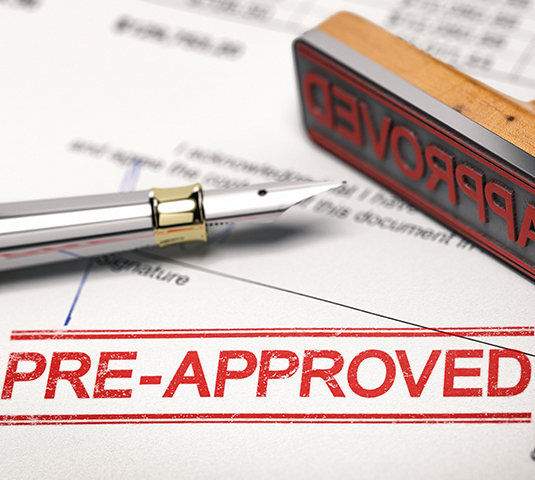
A pre-approval is what you need to be in the game. As part of the pre-approval process, the lender gets a full picture of your financial situation. The borrower will fill out an application, have their credit report run (either a soft pull or hard pull), and provide income and asset documentation, among other items.
With a strong pre-approval letter your offer will be in a better position than someone less prepared. It may also reduce the amount of time it will take your lender to underwrite and fund your loan when you do find a home and go under contract.
Underwritten Pre-Approval
Some lenders will go further and submit your complete file and documentation to an underwriter as if you are already under contract to buy a home. An underwriter’s full credit approval provides the strongest type of pre-approval and helps enhance your offer even further. Not all loan products allow for an underwritten pre-approval, but it’s a terrific option when available.
Here are some of the documents lenders might request and review in order toto issue a pre-approval:
Income
Income documents confirm that your employment is stable and your income is sufficient to cover your monthly mortgage and housing payment and other financed liabilities. Depending on your type of employment, you might provide recent pay stubs, W-2 forms, or federal tax returns.
Assets
Bank statements for various accounts are collected to document that you have the funds available for your down payment, other funds needed at closing, and sometimes, reserves. These could include checking or savings accounts or investment or retirement accounts.
Credit Report
A credit report tells the lender your credit scores which reflect your creditworthiness, or how good you are at making your necessary payments. Credit reports also reveal the other payments or financed liabilities, that you are obligated on.
Note that there are two types of credit checks, a soft credit pull and a hard credit pull. A soft credit pull is often done at the outset of the process and does not count as a credit inquiry and does not have any impact on your credit score. Most pre-approvals only require a soft credit pull. A hard credit pull is required before your loan can be underwritten and so is necessary for a full loan approval. Hard credit checks can cause a slight dip in score.
How Long Is A Pre-Approval Valid
Like many things in life, the answer to that question is: it depends. A credit report is typically valid for 120 days and financial documents are typically valid for 90 days. If your loan closing date falls before those deadlines then your pre-approval is good and your pre-approval letter will not lapse. However, if your closing will be after one of those expires then the solution is usually pretty simple. Your lender can run a new credit report as soon as it becomes known that the original report will expire before closing. Similarly, your lender will ask you for a more current copy of any necessary financial document, such as a more recent paystub or more recent bank statement if the collected documents will expire before closing. The goal is to anticipate timelines and not wait until the last minute.